Upcoming Events:

June 1 –  Magic brings Georgia to Icy Point (Icy Point)

June 2GCBQ5YC Stammtisch Taco Tuesday (XLVIII) (Anchorage)

National Cheese Day (Events for Introverts) Event Cache

June 4GCBNZP3 National Cheese Day (Events for Introverts)  (Eagle River)

June 6GCBQDC7 ADF&G Potter Marsh Discovery Day (Anchorage)

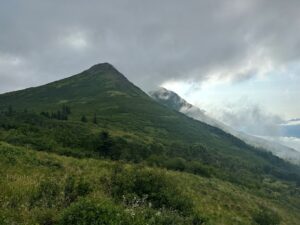
June 7GCBQCDR  Morning Butte Hike! (Palmer)

June 9 – GCBQFTR Westies Alaskan Adventure (Icy Point)

June 10GCBQCE1 Morning Lazy Hike! (Palmer)

June 11GCBQNBK Meet the Texans! Part 1 (Skagway)

June 13GCBQKQG Chugiak Cafe: June Event Cache (Chugiak)

June 13 –  GCBQMZT June CITO: Chugiak Benefit Association Cache In Trash Out® (Chugiak)

June 13GCBPHY3 Mazza_ caves and visits the willow ptarmigan state (Anchorage)

June 13GCBPT8H  Discover Reflections Lake (Reflections Lake)

June 16GCBQPP8 New Jersey Visits Palmer Meet n Greet (Palmer)

June 17GCBQCEB  Morning Knoll Hike (Palmer)

June 22GCBPCKY Hello from Japan 🇯🇵  (Fairbanks)

June 26 GCBKVTB  Bellinghamsters visit Anchorage (Anchorage)

June 27GCBPBVR BirkenstockReport Goes Fishing: Kasilof Edition (Kasilof)

July 11GCBPBVX Birkenstock Report Goes Fishing: Kenai Edition (Kenai)

August 9GCBQKPG All the way to Skagway! (Skagway)


Upcoming Souvenirs:

2026 Hider

Hide any Geocache in 2026 to qualify

Celebrating 25 Years – no time limit

Find all 5 treasures in “Celebrating 25 Years” Treasures collection to qualify

“Treasures” Milestone Souvenirs:

  •  Collect 100 Treasures
  • Collect 200 Treasures
  • Collect 300 Treasures
  • Complete 10 collections
  • Complete 25 collections
  • Complete 50 collections

For a full list of upcoming souvenirs, visit: 2026 Confirmed Souvenirs on the Geocaching BlogGCBNZP3

By: Mackenna Handeland (BirkenstockReport)

The Golden Ammo Cans: A GeocacheAlaska! Tradition

How an idea from the East Coast, with the help of a few sourdoughs,
became Alaska’s most beloved geocaching tradition


AN ORAL HISTORY WITH BLAZINGPATHWAYS, TOMANOBLE & VALERIESEAKER  ·  INTERVIEWED SPRING 2026

BLAZINGPATHWAYS

Victoria Noble

Geocaching since 2007 · Co-founder of the Golden Ammo Can Awards · Known for the extensive “AlaskanCachers” series hidden with her husband, Tom. ·  Hider of the Archangel Road letterbox series

TOMANOBLE

Tom Noble

Geocaching since 2007 · Former board member, Geocache Alaska · Longtime supporter of community events and inclusive outreach, one of the first to hide Challenge Caches in Alaska.

VALERIESEAKER

Valerie Manfull

Golden Ammo Can recipient · Active member of the Geocache Alaska community · Regularly brings her can into the field at community events · A puzzle-master 

It started with a story someone heard from back east. Famous Alaskan Cacher Douglas Leiser (Cohofive) had a daughter, IDAKrew, who was living out there and building up her find count, and when she hit one hundred caches, the local community gathered together in a café to celebrate. They gave her an ammo can. Simple as that. Victoria heard about it, told Tom, and the two of them took the idea to the Geocache Alaska board.

“The board said, well, we don’t want to do it for a hundred [finds],” Victoria recalls, “but why don’t we do it based on an Alaska theme?” And that’s exactly what happened. The milestone numbers were anchored to Alaska’s identity: 1959, the year of statehood, and 49, for the 49th state. A committee- the Celebrating Alaskan Caching Hallmark Experiences, or C.A.C.H.E for short– was formed, and the Golden Ammo Can Awards were born.

The 2013 Awardees with their new ammo cans at the 2013 event at Uncle Joe’s pizza.

A Surprise in the Beginning

The very first Golden Ammo Can ceremony wasn’t advertised as an award night. Guests arrived not knowing what they were walking into. “It was a surprise,” Victoria says, laughing. “Uncle Joe’s.” The recipients didn’t know they were about to receive anything, just that there was an event worth showing up to. By the second gathering, word had gotten around, and the tradition began to take its recognizable shape.

A screenshot of the original cache page for the inaugural Ammo Can Awards in September 2013.  GC463RA

At each event, the committee would research recipients in advance — counting hides, noting milestones, finding something genuinely specific to say about each person’s geocaching history. They’d read clues aloud to the crowd and let attendees guess who was being described before the can was presented. “We would look up what they’d done,” Victoria explains, “talk about their badges, where they’d placed, name a couple of things that were special about their finds.” It turned a simple handoff into something closer to a roast and celebration: warm, community-centered, personal.

Over the years, the program expanded to include multiple can sizes. The standard large ammo can covered the baseline milestones; a bigger one came at 100 hides; and for those reaching truly remarkable numbers — 10,000 caches — there’s the Project-A.P.E.-sized can, roughly the dimensions of a small carry-on bag. Victoria has one of those in her shed. Tom counted at least four between them. Past recipients of the 10,000 find can include Karma!, Lilgray, and Cavyguy. 

“We said, if somebody has a can, then what else are we gonna do? And we said, we could keep the activity going by having badges they could earn.”

— Victoria (BlazingPathways)

Earning Badges Keeps the Cans Fresh

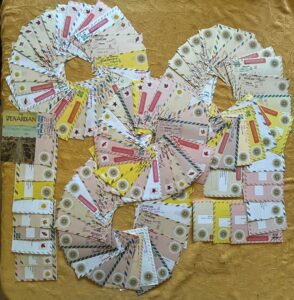
The badges were developed shortly after the first Golden Ammo Can awards. Cachers wanted more ways to display their achievements, so the board added stickers that could be earned and put on the cans. Nowadays, recipients can earn badges by hosting events, hosting CITOs, planning  EDUEvents, serving on the board, passing 10,000 finds, and advocating for Geocaching statewide, such as negotiating the state parks permit biannually. The C.A.C.H.E. committee is currently reviewing new ideas for badges to be earned. Eaccippi (Emily Stewart) can be contacted via geocaching.com if you have ideas on good badges to be earned. 

Over the years, the committee has also modified requirements for earning the golden ammo can, including requiring two years of Sourdough level membership with GCAK, to help offset the costs of the cans. 

The second round of awardees, photographed at the second CACHE event in 2015.  GC62AD8
The Golden Ammo Cans await their new owners at the 2015 event.
This selfie by Farmergang is the only photo from the event logs with the 2017 awardees. Oops! Thank you to FarmerGang for documenting this historic event with the caption “I know them!!” 

Keeping the Can Alive Through COVID

Like most community traditions, the Golden Ammo Can program had to adapt during the pandemic years. Indoor events gave way to outdoor gatherings, and some cans were handed out in quieter, more improvised ways — the Taco King near the Midtown library, at scattered outdoor meetups, shipped to recipients in Juneau and Fairbanks. Valerie mentioned Eaccipi, Emily Stewart packing some in her carry-on to deliver to Kodiak.  The geography of Alaska, always a logistical challenge, made individualized delivery feel oddly fitting. “I think we got them different ways,” Tom says simply.

“My goal was to try to make it easier on people who didn’t know other people — how to start something, if it wasn’t easy to just say hi.”

— Victoria (BlazingPathways)

What the Can Means

Ask any of the three where their ammo can lives, and you get a window into their relationship with the hobby. Tom and Victoria’s cans are in the shed now — a recent house reorganization moved everything into boxes — but Victoria says hers used to live next to her shoes, ready to grab for events. Valerie’s can has made public appearances at the community Trackable gatherings, stuffed with trackables and geocoins. You might find other notorious Alaskan cachers with theirs if you ask nicely. Recent awardees include Eaccipi, RSPace, and GeoFootstomper. To find a golden Ammo Can in the wild, you’ll need to visit ilikebuttermilk’s in Wasilla. It is featured in the hide at New Haven Little Free Library GCA26T0. Bring something gold to add to the swag! 

Bob Hazlett, aka Pentrek, receives his Golden Ammo Can at “Farewell for now, Pentrek” on Apr 23, 2026

The most recent awardee was PenTrek, who received one at his goodbye event in April, GCBMN0C. He plans to move “home” to Michigan this summer. He was honored at the most recent Ammo Can Awards event, but couldn’t make it, and the CACHE committee didn’t want to send him off with the can still in GCAK storage. 

The program, at its heart, was never just about numbers. It was about finding a reason to gather, to look someone in the eye and say: we see what you’ve done out there, in the rain and the dark, on the side of a mountain or in a grocery store parking lot, and it matters. “The goal was to try to bring as many people into the club,” Victoria says. “To foster membership, and to give back to those members who had been around for a while.”

As the 2026 Golden Ammo Can Awards approach, the tradition enters its latest chapter — one still rooted in those original values. If you see a beat-up, gold-painted ammo can sitting on someone’s shelf at the next event, now you know the story of where it came from: a café, somewhere back east, a family celebrating their daughter’s hundredth find, and two Alaskans who thought, why don’t we do something like that?


The Golden Ammo Can Awards have been held across at least five major events since the program’s founding, with additional cans distributed individually during the COVID years. Recipients have been recognized across Alaska, including Anchorage, Fairbanks, Juneau, and Kodiak. The CASH Committee — Celebrating Alaskan Geocachers with Heightened Recognition — continues to coordinate the awards program through GeocacheAlaska! Contact CACHE Committee Chair Emily Stewart at eaccipi@geocacheAlaska.com for more information and keep your eyes peeled for the next event announcement! 


by Wes Skinner (NorthWes)

A springtime visit to Homer gave me some time to get out and perform owner maintenance visits on geocaches I’ve hidden around the community.  As usual, the most common need was  or a new logsheet in the cache. However, one cache site a few miles out on East End Road towards the head of Kachemak Bay gave me an opportunity to perform a CITO site cleanup that recovered 16 glass & plastic bottles and 27 aluminum cans, as well as a slew of other garbage. The trash was all collected within 50 feet of ground zero, at the edge of a small pullout alongside the road. It appears some travelers stop here to slam down a drink (or two)  long with cannabis products and then throw the evidence out their vehicle window, based on  he trash I collected. After crushing aluminum cans I was able to fit all the debris inside a single paper sack I had along with me. The CITO activity took me only 20 minutes to perform,  with very little physical effort required.  Leaving the outdoors in better shape than how we found  it is perhaps one of the most positive impacts we can make on our community through the get-outside game of geocaching.  Sharing that CITO effort helps underscore our  ommitment to the “Leave No Trace” ethic we support in our game.

This particular cache is located on the paved East End Road at 1,400 feet of elevation above Kachemak Bay, and the dramatic view here of the head of the bay to the east and Halibut Cove and the bay to the  est are simply incredible. It’s especially lovely when fireweed is in full bloom, as they carpet the hillside descending down to Kachemak Bay. If you’re headed to Homer this summer, be sure to come out to GCA57GC East End View for this easy to find micro cache as well as the incredible view!

by Wes Skinner (NorthWes)

This spring, GeocacheAlaska! Inc. (GCAK) was again able to complete negotiations for a new permit from Alaska State Parks (ASP) allowing geocaches to be placed in state parks. In past years, the ASP permit was fairly simple and very inexpensive, with the only major requirements being that containers were labeled as geocaches in compliance with the ASP permit, and that the cache owner would perform an annual cache maintenance visit and log that visit both in the physical logsheet and in the online cache page.

The 2026 permit has many new requirements. The most significant changes require that no more than 500 geocaches total be placed on parklands statewide, that geocaches within Chugach State Park would have containers no larger than micros (preforms allowed), and that no caches may be placed in ASP campgrounds. The permit emphasizes the requirement for an annual owner maintenance visit, and requires immediate archival at year end for any cache without an owner maintenance visit. The permit cost came to a total of $1,350 in order to allow geocaching on ASP lands in all five regions across the entire state of Alaska. Initially, the permit was only for 2026, but our Advocacy Committee was successful in negotiating extension of the permit to 3 years (to the end of 2028) for the same cost. However, hundreds of caches must be archived to meet the new limits.

We’re engaged now in efforts to comply with the new 500 cache limit statewide, and the new size restriction on caches located within Chugach State Park. Please take time to visit our GCAK website’s Advocacy section to learn more about the new permit and its requirements. It is imperative for cache owners with caches on ASP lands to come into compliance by the end of August 2026, in order to help us with reports due to ASP by year end! We are working very very hard at keeping our geocaching game alive on state park lands, and need everyone’s help in bringing their cache placements into compliance.

As president, I’m calling on cache owners to archive immediately those caches which are outside of the current permit’s size requirements for Chugach State Park, and/or which haven’t had an owner maintenance visit in the past year.

Finally, I want to acknowledge the tremendous workload the terms of this new permit has placed on our Groundspeak Community Volunteer Greatland Reviewer. Mike Malvick is striving to help cache owners achieve compliance with the new permit, at a cost of countless hours of communication with cache owners. Additionally, GCAK’s webmaster Scott Aleckson has poured dozens of hours and tons of creativity into establishing our information pages on our website regarding the new permit.

Watch notifications for upcoming Eduvents which will walk attendees through the permit requirements, and how we can meet them effectively by the end of August 2026.

NEW!  2026 Alaska State Parks Permit

GeocacheAlaska! Inc.’s 2026 permit for geocaching within Alaska State Parks

GeocacheAlaska! Inc. applied near the end of 2025 for the annual permit to place geocaches within Alaska State Parks for the year 2026.  New permitting processes and requirements and a newly revised assessment of the impact of geocaches on Alaska State Park lands has led to major changes in gaining permission via a permit in order to continue geocaching activities across Alaska State Parks (ASP). Please read all the way to the end to see how GeocacheAlaska! Inc. is proposing to meet ASP requirements so we can continue to geocache across Alaska State Parks.

Geocaches placements are now described as noncompliant use of public lands,
because the geocache container is private property being left on public lands.  The new Permit details are listed here for your review. I’m going to draw attention to significant changes, and how GeocacheAlaska! Inc (GCAK) plans to help meet the new permit terms. While GCAK has negotiated the permit and paid its expense so we can continue to play our game across Alaska’s State Parks, it remains the responsibility of individual cache owners to conform to the terms of the permit. GCAK is asking cache owners to comply by August 31, 2026, to give time to prepare year-end reports.


There are eleven special stipulations, in addition to the new $1,350 three-year permit fee.

1 – Caches are prohibited in all State Historic Parks (such as Totem Bight and Independence Mine); a full list of such ‘historic’ parks is under development now and will be shared soon.

2 – Geocaches are no longer allowed in any designated campgrounds, meaning existing caches in campgrounds must be archived and removed immediately.

3 – Inside Chugach State Park new size restrictions limit caches to preforms or smaller; anything larger must be removed or replaced with compliant sizes. We suggest archiving large caches now.

4 – There is a new exclusion zone within Chugach State Park’s new Wilderness Zone (shown on an attached small-scale photo), where caches are prohibited (and any existing caches must be archived and removed immediately).

5 – The fifth stipulation reinforces the exclusion of food or scented items from geocaches.

6 – ASP is prohibiting caches from being placed on, in or tied to bear boxes, latrines, cabins or any other park facility or structure. Current caches placed like this must be archived immediately.
7 – This is going to get perhaps the most attention – it requires an annual cache inspection to be documented on the cache log and online by the cache owner – and violation of this provision is grounds for immediate archival at the end of year reporting date if it hasn’t been done.
8 – GCAK is going to be conducting EduVents to train cache owners and users regarding proper caching behavior.  The first of these EduVents will occur in mid-June.

9 – This is a desperately critical requirement that limits the number of caches allowed across all state parks to not exceed 500 caches total – meaning more than 650 caches must be archived by year’s end. This is one of our most challenging requirements to achieve

10 – This reinforces the ammo-can as a maximum cache size (except in the already-stated Chugach State Park zone where preforms or smaller are required).

11 – The eleventh provision requires an end-of-year report from GCAK to ASP. 

12 – Item twelve reinforces the need to inform all cache owners of the new provisions, with a target of compliance by the end of August so as to give GeocacheAlaska! Inc time to review compliance.

13 – Item 13 was added by the state to encourage geocachers to become members of GeocacheAlaska! Inc. – the permit holder – in an effort to support permit costs and compliance. However, this item is invalidated by Groundspeak Inc. legal policies which don’t allow regional permit holders to require organization membership to be involved in geocaching on permitted lands.
_________________________________________________________

How is GeocacheAlaska! Inc. going to attain compliance with the new permit?

The biggest challenge lies in getting cache placement numbers below the 500-cache limit. This will be accomplished in a number of ways – all of which depend on individual cache owners for action. Here’s a list of suggested actions for individual cache owners to help us get under 500:

1) Caches inside Chugach State Park?  If they’re inside the Wilderness Zone, they must be archived and removed immediately. All other caches larger than a preform should be archived and removed to help reduce cache numbers and build compliance no later than August 31st (note that downsizing and editing the cache page will affect Challenge and Treasure statistics).   Any caches in a designated campground must be archived immediately and removed.

2) Caches placed on ASP facilities and structures must be archived; this in preference to trying to relocate the existing cache placement due the cache quantity limit.

3) Owner maintenance visits must occur and be logged on ASP caches by August 31st.  This is a major issue with caches placed in state parks – inspections by park rangers are revealing a very low compliance rate with previous permit requirements to inspect and log owner maintenance on cache placements in ASP.  Rangers will be holding individual cache owners accountable for this requirement. It’s suggested that if you own a cache that you have a hard time getting out to for the owner maintenance requirement, archive it!


Let’s keep ourselves accountable for the best effort possible to keep our geocache placements in excellent condition. There is no shame in self-archiving geocache placements which have become too difficult to maintain.

If you own geocaches inside State Parks, this summer must find you getting your caches into compliance with our permit or getting your caches archived.

GeocacheAlaska! Inc. volunteers already have dozens and dozens of hours invested in this project and are expecting to spend hundreds more in follow up and reporting. We’ll be reaching out cache by cache as needed to try and gain compliance with permit requirements. Contact Wes Skinner if you have questions ( president@geocachealaska.org ) and be watching for EduVents coming soon.  Note that our state park rangers are genuinely interested in seeing geocaching happen across Alaska State Parks – but it has to happen in compliance with the permit! Individual cache owners could be subject to fines as high as $350 for noncompliance!

Alaska State Parks has issued this permit with its stipulations in order to make it possible for geocaching to continue to be played across Alaska State Park lands. Please help us continue access for geocaching by helping achieve compliance with the ASP permit provisions!


Wes Skinner, President


Via The Geocaching Blog

When geocachers step outside with a GPS-enabled device, they’re tapping into decades of brilliant science and mathematics that make those coordinates possible. Behind every successful find stands a brilliant mathematician whose work helped make modern GPS possible: Dr. Gladys West.

1930 – 2026
Image from the New York Times.

Gladys West’s groundbreaking work focused on solving a deceptively complex problem: determining the Earth’s precise shape.

In the 1960s and 1970s, West helped process vast amounts of satellite data to model Earth’s geoid. Because satellites orbit based on Earth’s gravitational field, understanding this shape was essential for calculating accurate positions on the planet’s surface. West programmed early supercomputers to analyze oceanographic and satellite measurements, producing increasingly precise models that became foundational to the development of the Global Positioning System (GPS). When GPS satellites were later deployed, they relied on these accurate Earth models to translate satellite signals into the exact coordinates we use today for navigation, mapping, and location-based technologies.

Geocaching is built on a beautifully simple idea: use GPS coordinates to find hidden treasures around the world, but the magic behind those coordinates depends on an incredibly sophisticated system of satellites, timing signals, and Earth models.

Thank you, Gladys West, for advancing geodesy and satellite modeling, making the precision of geocaching possible!


Celebrate Blue Switch Day 2026 by hiding a geocache, and earn your Blue Switch Day 2026 hider souvenir.

Blue Switch Day 2026 hider:

  • To earn this souvenir, geocachers must have a non-Event geocache published between May 1 and 31, 2026.
    • Any non-Event geocache type (excluding Adventure Lab®) counts, as long as it is published between May 1 and May 31.
    • Remember that review times may vary! A geocaching community volunteer will typically begin reviewing your geocache within 7 days. We recommend submitting your cache for publication at least a week before the deadline. Learn more about the cache review process in our Help Center.

How will you celebrate Blue Switch Day this year?


Via The Geocaching Blog

Upcoming Events:

April 29GCBN9N7  I’m losing it…. (Eagle River)

April 30GCBM70N Maker Magic 2026: Tree-Friendly Birdhouse Hides (Eagle River)

May 1GCBNBZ0 Stammtisch May Day (XLVII) (Anchorage)

May 2GCBN1KK  SYCS: April Showers Don’t Bring May Donuts? (Palmer)

May 2GCBN9ME scobey the Puzzlemeister (Anchorage)

May 4GCBKCV9 SYCS: Lekker April (Palmer)

May 4GCBKJR1 Blue Switch Day (Anchorage)

May 4GCBKJR1 Blue Switch Day (Anchorage)

May 6GCBMZMD The LAST SCYS: Sleepy Thursday  (Eagle River)

May 10GCBMYN6 👋 Meet & Greet ☕️ (Juneau)

May 11GCBNH6K  Geocaching for old caches in Sitka (Sitka)

May 16 GCBNDJY – Im stealing this from Brik (Chugiak)

May 16GCBNJYP RB & Cyto’s Palmer Cleanup! CITO (Palmer) 

May 16GCBKBRD Springtime in Seward – The Mermaids are about (Seward)


Upcoming Souvenirs:

Cache In Trash Out®, Season 1 – March 1–May 31

Log any CITO event to qualify

Maker Magic – April 9-30

Attend any Maker Magic event to qualify

Blue Switch Day Finder– May 1-31

Find any Geocache or attend an event to qualify

Blue Switch Day Hider – May 1-31

Have a non-Event Geocache published  to qualify

2026 Hider

Hide any Geocache in 2026 to qualify

Celebrating 25 Years – no time limit

Find all 5 treasures in “Celebrating 25 Years” Treasures collection to qualify

“Treasures” Milestone Souvenirs:

  •  Collect 100 Treasures
  • Collect 200 Treasures
  • Collect 300 Treasures
  • Complete 10 collections
  • Complete 25 collections
  • Complete 50 collections

For a full list of upcoming souvenirs, visit: 2026 Confirmed Souvenirs on the Geocaching Blog

General Notice about the Alaska State Parks permit status:  


Our previous permit is expired and no longer useable for cache placements. GeocacheAlaska! Inc. has been negotiating a new permit with Alaska State Parks over the last few months. The State is adding a number of new restrictions for placing geocaches on State Parks lands. Until the new permit is finalized and the geocaching community brings all existing caches into compliance with the new permit, there will be no new cache placements accepted by Geocaching HQ and our regional Reviewer for any Alaska State Park location. We anticipate having the final permit back by mid-May and it will be published shortly afterward. We are also building an educational campaign describing each permit requirement and that will be rolled out when we publish the new permit in it’s final language.


By Mike Malvick (GreatlandReviewer/ladybugkids)

scobey, archived

John Leon Scoblic (aka scobey), age 76, of Anchorage, Alaska, passed away on Dec. 25, 2025, at home after a long and valiant battlewith   cancer.  His full obituary was published in the Anchorage Daily News on January 4, 2026.  His funeral was held at St. Elizabeth Ann Seton Catholic Church on January 10, 2026, and he was interred at Fort Richardson National Cemetery in April, 2026.

Scobey was a fixture of geocaching in southcentral Alaska for six years beginning in 2004, before his health and other factors limited his ability to get outside and enjoy one of his favorite pastimes.  Despite being active for a relatively short stint, his geocaching legacy lives on through his caches and GeocacheAlaska!

Scobey’s family engaged in geocaching and his wife Linda, and his daughter, Alicia (aka Geminigirl) often accompanied him on his caching outings.  His adult son, John, also tagged along when scobey visited his family in Ketchikan, Alaska, and scobey commemorated the birth of his second grandson, Jonathan, with Johnathan’s Cache.  His beloved bichon frise dog, “Beamer,” was rarely far from scobey.

Scobey has numerous notable caching firsts in Alaska:

  • First Challenge Cache: Alaska Borough and Census Challenge (GCYPMN)
  • First GeocacheAlaska! website
  • Launched the GeocacheAlaska! Forums
  • Founding Member of GeocacheAlaska!
  • First Alaskan cacher pathtag (scobey)
  • First Alaskan dog pathtag (Beamer)
  • First Alaskan to break a bone while caching, which led to the production of the “Geocacher Needs Maintenance” geocoin and pin as a show of community support for his quick recovery. Be sure to click the link for the full story in the geocaching.com forums. 
  • First or second nano cache placed (I was unable to confirm whether the community gets to blame scobey or oleruns for this)

In addition to geocaching, scobey also enjoyed hunting for benchmarks, and frequently placed caches near them to highlight their presence and encourage other cachers to log them both at geocaching.com and the United States Geological Society (USGS) sites.  He was regularly found scouring an area with a metal detector and a shovel, searching for “marks” that urban sprawl had covered.  

Scobey enjoyed combining traveling with caching and attended the third annual Geocoinfest (2007) in Temecula, California, and cached his way through palm tree oases, slot canyons, and nearly got arrested by tribal police at the edge of a casino parking lot while hunting for a cache that was placed without tribal permission.  His southernmost find is in Ecuador and his easternmost find is in the Philippines.  He also cached in Dubai, United Arab Emirates. 

Scobey was always loyal to technology and enjoyed razzing anyone who used a Magellan rather than a Garmin GPSr.  He also applied technology to his caches, including the still active Radio Days (GC1JWBZ) multicache.  Scobey enjoyed creating series of caches to reveal his love of:


Scobey was a complex, talented, and generous person who brought his varied interests to the local caching community and we are better for it.  He is missed.

Note:  A geo-memorial celebration of caching, “Scobey the Puzzlemeister(GCBN9ME) is scheduled for 4:00-5:30 p.m. on Saturday, May 2, at Russian Jack Park North Pavilion.


By Mike Malvick (Greatland Reviewer/ladybugkids)

The following is adapted from a Geocaching.com Forum post written by Community Volunteer Reviewer Keystone nearly twenty years ago in June 2006, with minor modifications based upon Guideline changes and conditions specific to Alaska.  Keystone has reviewed cache pages for Pennsylvania and Ohio since 2003.

When reviewing a new cache page submission, the Community Volunteer Reviewer (Reviewer) starts with the proposition that the hider of the cache is responsible for obtaining “adequate permission.” Note that it says “adequate permission” in the Guidelines — NOT just “permission.” The Reviewer relies upon cache owners to think about this issue and make a determination about what permission is necessary. In submitting a cache page, the geocacher assures the listing service (Groundspeak/Geocaching HQ/Geocaching.com) that adequate permission has been obtained, and the listing service assumes that this is the case. As a listing service, Geocaching.com is not a guarantor of the proposition that every cache is placed with permission. But sometimes there are circumstances why this assumption ought to be questioned. Here are some of them:

  1. When a landowner/land manager such as a park system (Alaska State Parks is GeocacheAlaska!’s primary permit issuer) or a private land conservancy trust has a published geocaching policy that Groundspeak is aware of, then the Reviewer will ask the cache owner about compliance with that policy. Knowing of the policy’s existence, it is not appropriate to blindly assume compliance with the policy if no mention is made of this on the cache page. So the Reviewer will ask whether a required permit has been obtained or, in the case of a blanket permit such as with Alaska State Parks, if the stipulations of the permit are met.  In some cases, such as National Parks, National Wildlife Refuges, and National Monuments, which generally do not have an open geocaching policy, we will ask whether the hider obtained explicit permission from the Land Manager or their designee. 
  2. When a cache is hidden on land that is obviously private, like someone’s back yard, it is unwise to blindly assume permission. Usually permission is stated or implied on the cache page (“this cache is hidden in our front yard — please, no night caching”). If it isn’t, the reviewer may ask about it. The guidelines require permission for caches hidden on private property. There’s even a specific sentence about never ignoring a “no trespassing” sign.
  3. Some locations are so sensitive in nature that it is unwise to assume that permission has been obtained, so specific listing guidelines have been adopted to guard against placements in those areas. Examples include airports, government buildings, school yards, dams, highway bridges, and utility infrastructure. If the reviewer sees a cache in one of these locations, they will challenge the assumption of adequate permission by reference to these specific guidelines.

In most other cases — ranging from suburban parks to shopping centers to little free libraries — it is up to the cache owner to determine what constitutes “adequate permission.” One cache owner might conclude that no formal permission at all is needed for a particular spot, while another will obtain written or oral permission for a different cache location because their instinct tells them that permission is a good idea. If the cache owner arrives at an unwarranted conclusion, the listing service will react to questions about permission. First, if a land owner/land manager requests removal of a cache placed without permission, Groundspeak’s policy is to archive the cache unless and until the hider is able to straighten things out and provide an explanation of clear permission. Second, if another geocacher sees a cache location which causes them to have doubts about permission, they are welcome to raise their concern with the cache owner. If that is not productive, the geocacher may contact  Groundspeak via the Contact Us link, contact the local Reviewer, or write a “Reviewer attention requested” log on the cache page. The system is thus largely self-policing in this majority of circumstances.