
By Wes Skinner (NorthWes)

NEXT STEP: GeocacheAlaska Inc. is beginning the next step to help geocachers achieve compliance with the terms of the 2026 Alaska State Park (ASP) Permit which allows geocaches on land managed by ASP. This next step will involve using our review of the approximately 540 geocaches remaining on ASP lands to institute contact with geocache owners who have not brought their caches into compliance with terms of the permit, as listed below. GeocacheAlaska Inc. will be reaching out to owners of noncompliant geocaches using direct email contact, and will use social media to draw attention to the need to finalize compliance as well. This begins a process which will result in archival of geocaches which fail to meet permit conditions over the course of the next 90 days or so.

Of the 540 geocaches remaining on ASP land, only 67 have fully met the permit compliance requirements, as of the end of September.


PERMIT COMPLIANCE REQUIREMENTS

Three basic items; #1  and #2 are required for ALL caches: 

 1. Caches MUST have a cache owner (CO) maintenance log indicating the CO visited the hide*

2. The ASP permit number must be shown in the cache description and in the CO maintenance logs, and we are requesting cache descriptions be edited to read

“Placed under terms of ASP permit number LAS-35694” as part of an effort to ensure acknowledgement of permit terms.*

3. If the cache is in Chugach State Park, it must be micro-size (preform or smaller)


*Format required for CO maintenance logs (one of two versions allowed):

“Annual Owner Maintenance for Alaska State Parks permit number LAS-35694.  Cache container inspected and log signed, as required.”

or

“Annual Owner Maintenance for Alaska State Parks permit number LAS-35694 performed by pre-arranged proxy with CacherX.  Cache container inspected and log signed by CacherX on behalf of the Cache Owner.”

Note: If you act as a proxy, make sure you have cache owner permission. These templates have been reviewed and approved by the ASP Permit office. Note that the permit enforcement staff from ASP are looking for these formats to be used in both the physical cache log and the online owner maintenance log.

Fellow Alaska Geocachers – it is imperative that we act immediately to get our geocache placements on Alaska State Park lands into full compliance with these permit requirements! Reminder: noncompliance leads to archival of the cache.

by Wes Skinner (NorthWes) 

Please take time to read the update article on compliance with the 2026 Alaska State Park permit terms. More than 400 geocaches are facing archival over the course of the next three months if they’re not brought into compliance with permit terms!

If you’re interested in helping geocache owners get their caches into compliance, note that the Alaska State Park staff are allowing us to do ‘proxy’ owner maintenance visits on behalf of the actual cache owner. This means you can file a ‘proxy’ owner maintenance log when you visit
the cache (and sign the cache log correctly), as well as by filing the same log online (but only if you have permission from the cache owner!).

There is a requested format for how cache owner maintenance logs are to be written, which is detailed in the accompanying article.
Please update any owner maintenance logs you’ve filed online to meet the format as requested by Alaska State Parks. I know I’m sounding somewhat like a broken record as I continue to draw your attention to efforts being made to meet the terms of the 2026 permit. I will point out that for more than 15 years the Alaska State Park permits have required annual owner maintenance visits to be logged both in person at the cache and online on the cache page, so this is nothing new.

However, a review of how often that’s been done in the past shows an embarrassingly high lack of compliance on the part of geocache owners, which was noted by Alaska State Park enforcement staff (rangers and maintenance personnel) during their field visits to inspect existing geocache placements. We’re being called to compliance – which means actually doing what we said we’d do when we first put our geocaches out on state park lands.

GeocacheAlaska Inc. staffers have put in tremendous amounts of time in doing the review work and outreach necessary to help us get our geocachers to bring their cache placements into compliance with permit terms. As part of the necessary effort this review process requires,
a volunteer Auditor position serving as part of the Advocacy Committee was created. This Permit Compliance Auditor runs weekly updates of geocache compliance (using GSAK – the Geocaching Swiss Army Knife online application) to review cache placements for owner maintenance logs and for size compliance where necessary (meaning micro-sized within Chugach State Park only).

Our staff has reached out to Groundspeak Headquarters to review this process, and is gratified to find them in support of our efforts to maintain our opportunities to play the get-outdoors game of geocaching across Alaska’s state parks. As a fundamental part of the review process when geocaches are submitted to the local volunteer reviewer, Groundspeak requires that the geocache owner has complied with landowner / land manager conditions regarding the geocache placement. I’m calling on all of us to be found faithful in meeting this requirement to meet the permit terms with the geocaches we have placed across Alaska’s beautiful state park lands.

by Michael Malvick (Greatland Reviewer)

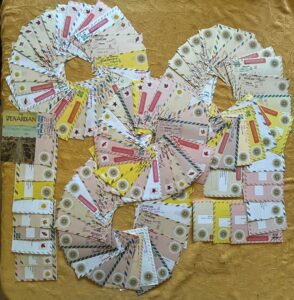
GeocacheAlaska! participated in World Postcard Day by hosting three events and mailing 148 postcards around the world. Ladybug Kids compiled addresses for events  round the world by reaching out to Event Hosts as their events were published and offering to exchange post cards.

The fun began with two “pre-events” held August 22nd, in Soldotna (GCBVH1R), and August 29th, in Anchorage (GCBVKY6), when most of the postcards were signed  by event attendees.  An additional 25 postcards were signed at the 2026 World Postcard Day Finale, (GCBY5YF), on September 27.. Postcards went to twenty-one states and twenty-two countries and have a geocaching.com tracking number on them. Geocachers from events at many locations are logging the postcards as they arrive. Their logs, many in foreign languages, may be seen on the postcards’ page. 

Many thanks to BirkenstockReport who designed the postcards and stickers, provided the tracking number, hosted the Soldotna Event, and supplied the colorful sharpies for the signing events! 


by Michael Malvick (Greatland Reviewer)


Each time a geocacher creates a cache page to submit for review and publishing, s/he checks a box next to the statement

A basic tenet of the Geocaching Hiding Guidelines is “by submitting a cache page, you agree that you have all necessary permissions from the landowner or land manager to hide your geocache at that location.”

So, how do you determine that? One way NOT to do that is place a geocache in an area just because another cacher hid a geocache there without verifying that cacher got necessary permission. This is because the first cacher may not, in fact, have sought and received permission, or, permission conditions and/or land parcel boundaries may have changed.

Your first stop can be the Regional Geocaching Policy Wiki which lists all the KNOWN locations caches can be placed, required permits, and areas where caches are prohibited. The Wiki is maintained by Geocaching HQ and the Community Volunteer Reviewers. If you become aware of an area where caching is or is not explicitly allowed in Alaska or Hawai’i that does not appear in the Wiki, please let Greatland Reviewer know through his profile’s e-mail or message links.

The Wiki also contains links to downloadable GPX format boundary files to use with Google Maps, GoogleEarth, Garmin Basecamp, and many other free mapping applications which allow overlays of the land parcel boundaries and geocaching pocket query GPX format files. Also included are links to several borough Geographic Information Systems (GIS) that include land ownership information which is useful for determining private versus public status.

Portable tools that work with Android and iPhones include the Acres and onX applications, which are available at different subscription levels.

Even more “how to” information can be found in the GeocacheAlaska! Eduvent Library. It is now easier than ever to know who owns or manages the land where you are standing with all the available online and application tools.

Make certain you know before you hide a cache and get turned back by the Reviewer or later have your cache archived upon the request of a land owner or manager who does not want a geocache on their property. If permission is received, get the permission in writing to document the permission in the event of ownership or management change. If an agreement is not confirmed in writing, it becomes hearsay in the future.


For more resources on researching land ownership, and how to be good supporters our local reviewer, check out the slide deck from the recent Reviewer Night eduevent: 

Reviewer FUNdamentals10012026