By Wes Skinner (NorthWes)
NEXT STEP: GeocacheAlaska Inc. is beginning the next step to help geocachers achieve compliance with the terms of the 2026 Alaska State Park (ASP) Permit which allows geocaches on land managed by ASP. This next step will involve using our review of the approximately 540 geocaches remaining on ASP lands to institute contact with geocache owners who have not brought their caches into compliance with terms of the permit, as listed below. GeocacheAlaska Inc. will be reaching out to owners of noncompliant geocaches using direct email contact, and will use social media to draw attention to the need to finalize compliance as well. This begins a process which will result in archival of geocaches which fail to meet permit conditions over the course of the next 90 days or so.
Of the 540 geocaches remaining on ASP land, only 67 have fully met the permit compliance requirements, as of the end of September.
PERMIT COMPLIANCE REQUIREMENTS
Three basic items; #1 and #2 are required for ALL caches:
1. Caches MUST have a cache owner (CO) maintenance log indicating the CO visited the hide*
2. The ASP permit number must be shown in the cache description and in the CO maintenance logs, and we are requesting cache descriptions be edited to read
“Placed under terms of ASP permit number LAS-35694” as part of an effort to ensure acknowledgement of permit terms.*
3. If the cache is in Chugach State Park, it must be micro-size (preform or smaller)
*Format required for CO maintenance logs (one of two versions allowed):
“Annual Owner Maintenance for Alaska State Parks permit number LAS-35694. Cache container inspected and log signed, as required.”
or
“Annual Owner Maintenance for Alaska State Parks permit number LAS-35694 performed by pre-arranged proxy with CacherX. Cache container inspected and log signed by CacherX on behalf of the Cache Owner.”
Note: If you act as a proxy, make sure you have cache owner permission. These templates have been reviewed and approved by the ASP Permit office. Note that the permit enforcement staff from ASP are looking for these formats to be used in both the physical cache log and the online owner maintenance log.
Fellow Alaska Geocachers – it is imperative that we act immediately to get our geocache placements on Alaska State Park lands into full compliance with these permit requirements! Reminder: noncompliance leads to archival of the cache.

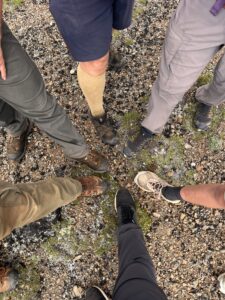
 In July 2026, my younger daughter and I joined my brother and his family for a trip to Thailand to attend a wedding of a Norwegian cousin. The day after the wedding, American and Norwegian family members took a tour of Ao Phang Nga National Park in Phang Nga in the Strait of Malacca between the island of Phuket and the mainland of the Malay peninsula of southern Thailand. The highlight of the tour for me was visiting
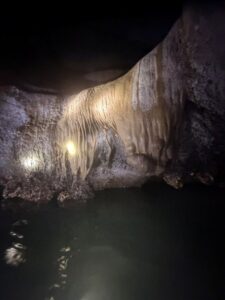
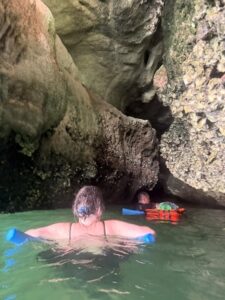
 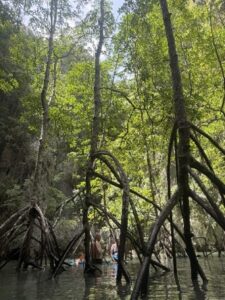 “Koh” means “island” in Thai. A “hong” is a sinkhole that formed in the middle of the limestone island due to the rock being dissolved over time by water, similar to how limestone caves are formed. What makes this hong unique is the bottom is accessible only through a narrow passageway that is filled with water at high tide and becomes navigable as the tide falls. Our tour operator scheduled the tour so we arrived at the island just as the passageway could be swum through, but before the hordes of kayakers arrived. So, with mandatory swim noodles and flashlights (torches) in hand, we jumped off the boat and followed our intrepid guide through the passageway.