
By Tim Janneck (AlaskaTim)
“But in every walk with Nature one receives far more than he seeks.”
John Muir
|
I often head into the State Park – partially since it begins about a 100 feet away from where I sit now writing these words. While out today in the park, I had a pretty thoughtful hike. There are times when I hike or ski there with something on my mind – something I am mulling over or maybe some issue to be resolved. How I go into the park can affect the experience, but I usually come back better for the outing. Today’s visit was a little different as instead of going out for exercise, for views, or for hiding some new caches – I was going on a hike to de-cache parts of the park where I have been recreating for decades. The caches are newer – I found my first ever geocache just about 10 years ago in the Chugach State Park, and hid my first cache in the park around 9 years ago. But today was mostly about taking those caches away. Of the 10 caches of mine that I visited today, I removed 8 of them. Most of those removals were predicated by the new Alaska State Parks permit that requires geocaches in Chugach State Park to be no larger than preforms. Maybe not everyone is as aware of the State Park geocaching permit changes? There are around 1,100 geocaches in 5 state park regions. The new permit conditions require 500 or less (600 must be archived). In addition – in Chugach State Park – containers cannot be larger than preforms, and lastly – each cache must be visited annually – the log must be signed by the owner and the visit has to be documented as owner maintenance. It turns out that I managed to place 105 caches in the State Parks, and so my summer plans have been mightily impacted by the new permit stipulations. I have always thought of the geocaching community as an ally and advocate for the State Parks and it is sad to consider that this role may be less certain now. My state of mind has been impacted for awhile since the terms of the new permit were explained. Probably others had a similar reaction – caches that were placed more than a decade ago are suddenly non-compliant? The idea of retroactive changes to our geocaching efforts is hard to accept. Can you imagine the IRS deciding to retroactively change taxes from 10 years ago and sending you a bill? Or your college or high school explaining that they have revised their requirements for granting a degree and demanding your diploma back? These thoughts were my company as I headed out onto the familiar trails … Discoveries awaited me on the hike – as they usually do. More trees were down than the last time I passed by. I found a trackable stuck in one of the removed caches – a trackable that was marked as lost, but is now back in circulation. I found lots of evidence of the Squirrel Axis of Evil as they pursued their vendetta against me and my containers. I was glad to see that the containers that I had designed and 3D printed had stood up to those squirrel terrorists and the relentless assault of rain – even if I now had to remove all of them due to the new size restrictions. I was thinking about what was lost – just today. I know the caches I took out today were not really historical nor were they wildly popular – but they represented something to me and to those who found them. The eight removed caches represented 120 finds, 10 favorite points, and lots of stories, comments and photos of adventures and the park. A number of the removed caches were placed during COVID – an attempt to improve my mental health and to possibly help others with their own. The hides were placed on unnamed but fun trails in the hopes of showing them to others. I found a hill off a trail (I named it Highbrow Hill for no logical reason) – a place with a nice view, and where most might not think to explore. I found a tiny meadow just off Blueberry Hollow trail and placed a cache there and called it “The Fen”, hoping that the magic I felt there might be shared with others. While I considered all the memories and stories just from these 8 modest caches, I mourned the loss of the future visits and explorations that might not even happen in the park – without a beckoning geocache hidden out there to encourage the next visit.
One of my discoveries today was that the trails seem shorter when I am on my way to or from hiding a new cache. When the hike only means removing hides, my feet are heavier and the hills are steeper. As our community tries to adjust to new uncomfortable regulations, we have to do the work to ensure compliance, and then we need to figure out what’s next? I have been thinking about what it means to me, and whether I will be paring back my contributions or whether I need to consider other locations to visit. As I think about it, I do see that I have a lot of removed containers sitting here …
|
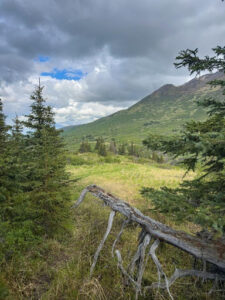
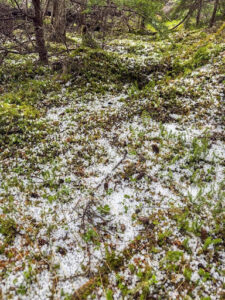 I think the geocaching gods might have sensed my mood and provided a dramatic backdrop for me, as I was engulfed in a hail storm and thunder while removing my first night cache final. What began as a novelty (falling ice in mid-June) became colder and eventually quite wet. I envied the solidity and dryness of the ammo can I collected in the hail and rain, but the ammo can seemed to add a lot of weight when combined with other removed caches in my pack.
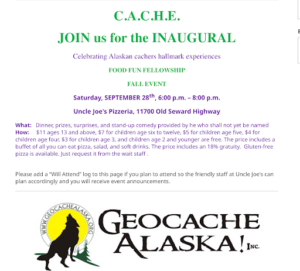
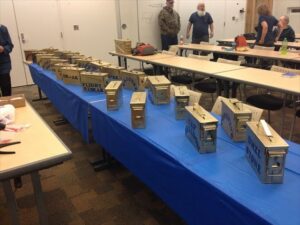
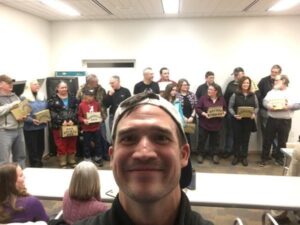
 The AK State Parks 2026 Geocaching Permit Eduvent (

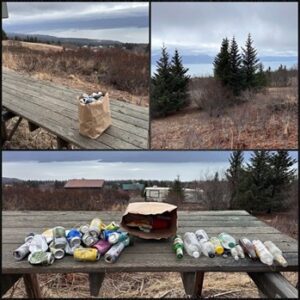 A springtime visit to Homer gave me some time to get out and perform owner maintenance visits on geocaches I’ve hidden around the community. As usual, the most common need was or a new logsheet in the cache. However, one cache site a few miles out on East End Road towards the head of Kachemak Bay gave me an opportunity to perform a CITO site cleanup that recovered 16 glass & plastic bottles and 27 aluminum cans, as well as a slew of other garbage. The trash was all collected within 50 feet of ground zero, at the edge of a small pullout alongside the road. It appears some travelers stop here to slam down a drink (or two) long with cannabis products and then throw the evidence out their vehicle window, based on he trash I collected. After crushing aluminum cans I was able to fit all the debris inside a single paper sack I had along with me. The CITO activity took me only 20 minutes to perform, with very little physical effort required. Leaving the outdoors in better shape than how we found it is perhaps one of the most positive impacts we can make on our community through the get-outside game of geocaching. Sharing that CITO effort helps underscore our ommitment to the “Leave No Trace” ethic we support in our game.
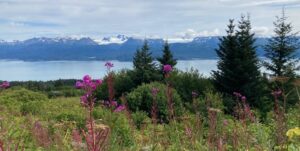 This particular cache is located on the paved East End Road at 1,400 feet of elevation above Kachemak Bay, and the dramatic view here of the head of the bay to the east and Halibut Cove and the bay to the est are simply incredible. It’s especially lovely when fireweed is in full bloom, as they carpet the hillside descending down to Kachemak Bay. If you’re headed to Homer this summer, be sure to come out to
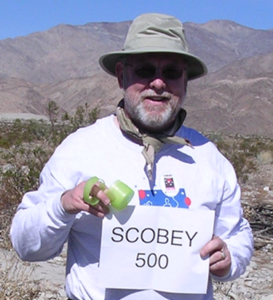

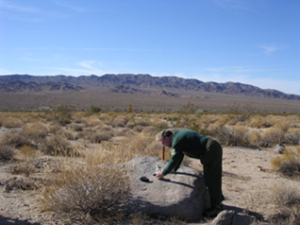 In addition to geocaching, scobey also enjoyed hunting for benchmarks, and frequently placed caches near them to highlight their presence and encourage other cachers to log them both at geocaching.com and the United States Geological Society (USGS) sites. He was regularly found scouring an area with a metal detector and a shovel, searching for “marks” that urban sprawl had covered.
 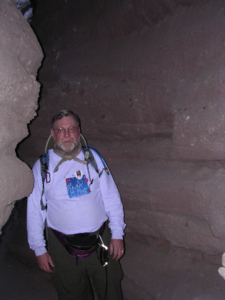 Scobey was always loyal to technology and enjoyed razzing anyone who used a Magellan rather than a Garmin GPSr. He also applied technology to his caches, including the still active Radio Days (